Skip to content
WaterproofingIndex

How Much Does Foundation Repair Cost in Toronto in 2026?

Last updated: By Below-Grade Records Desk

A leaking crack is the cheap end of foundation repair in Toronto, at $750 to $1,000 for a polyurethane injection according to DryShield. Structural work costs far more: carbon fibre straps on a bowing wall run $3,000 to $8,000 and rebuilding a failed wall runs $15,000 to $40,000, per Toronto Basement Underpinning. A structural engineer's assessment is $500 to $1,500.
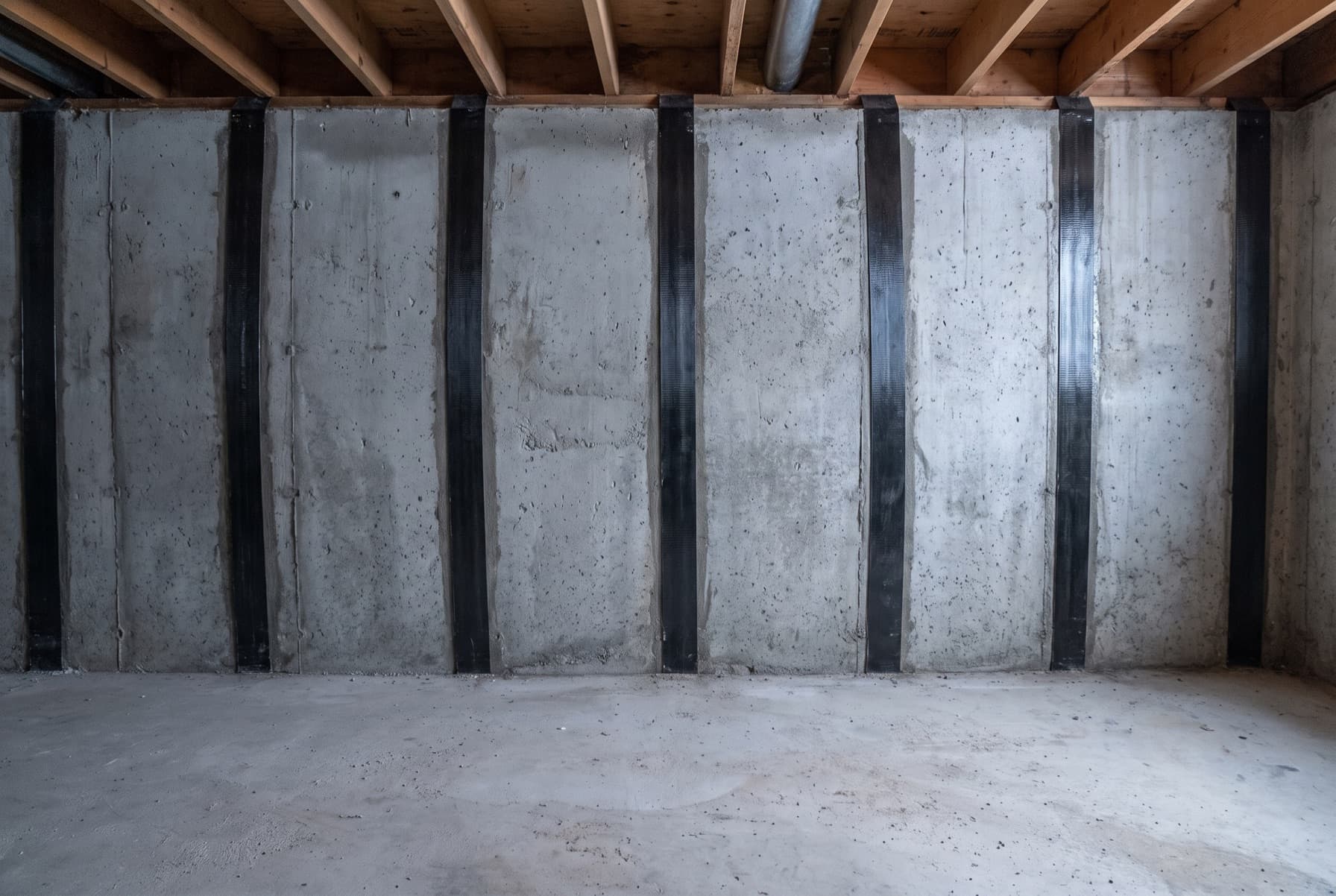
Illustration: the inside face of a poured concrete basement wall with wide black carbon fibre straps bonded vertically to it at even spacing, running from the floor slab up to the joists.
Illustration generated for this guide. Not a photograph of a real job, and not evidence of a price. The photographs further down this page were published by the companies named beside them.

Prices

What does each foundation repair cost in the GTA?

This range rests on 8 independent named sources, across 15 priced lines. Every figure was re-read in August 2026 in the source that publishes it, and any figure whose source could no longer be read was removed rather than carried forward. Where two sources disagree, both rows are shown as their own sources published them; nothing is averaged and no range is widened to cover a gap.

Every figure below was read off the page named in its own row, in August 2026. Canadian dollars, before Ontario’s 13% HST unless a row says otherwise. The line under each item is the condition recorded with that figure: what the number covers, and what it does not. Some of these prices are published by contractors this directory also lists. Those rows are marked. A company cannot buy a ranking position by supplying a figure.
ItemTypical rangeUnitSource
Interior crack injection, poured concrete wall, polyurethane (stops the leak)Per crack. DryShield calls the whole $750 to $1,000 band its typical range. Polyurethane stops the leak; it does not restore structural strength.$750–$1,000per crackDryShield (Toronto)also listed in this directory
Interior crack injection, structural epoxy (rigid bond, for stable structural cracks)Per crack, at this contractor's current published rates, for accessible poured-concrete cracks up to roughly 6 to 8 feet. Longer or awkward cracks are quoted separately.$850–$1,500per crackConcrete Crack Repair Pros (Toronto)also listed in this directory
Interior injection on one accessible leaking vertical seam, full program with access and prepPer crack, for one accessible seam, and it covers prep, routing, ports, injection, surface seal and a small finish patch if needed.$1,500–$3,000per crackLeaquida Waterproofing (Toronto)
Tie-rod hole sealing (form-tie holes in a poured wall)Per hole, for form-tie holes in a poured wall. Charged alongside an injection, not instead of one.$75–$150per holeDryShield (Toronto)also listed in this directory
Exterior crack repair, excavation and membrane at the crack locationPer linear foot, and the high end is open-ended at $250+ rather than a ceiling. This is the exterior route, reached by excavation.$150–$250+per linear ftDryShield (Toronto)also listed in this directory
Exterior crack repair, whole job total (varies with depth and access)A whole-job total for the exterior route, and the source ties the spread to depth and access. The high end is open-ended at $20,000+.$5,000–$20,000+per jobDryShield (Toronto)also listed in this directory
Exterior foundation repair to stop a basement leak, depth and access dependentPer linear foot, and the source says it is heavily dependent on depth and accessibility.$100–$300per linear ftGamcon (Toronto)also listed in this directory
Carbon fibre straps, bowing wall reinforcement, installedPer wall. Straps are the reinforcement answer for a bowing wall; they are not appropriate for horizontal cracks, active settlement or ongoing movement.$3,000–$8,000per wallToronto Basement Underpinning
Carbon fibre strap, individual brace (straps are typically spaced along the wall)Per individual strap. The same sentence prices the whole wall at $2,000 to $5,000, and the number of straps depends on the size of the wall.$500–$1,000per strapFoundation Fix (Southern Ontario)
Steel wall anchors, bowing wall stabilization and partial recovery of the bowPer wall. The source notes finished walls require demolition first, and that the floor joist above has to be able to accept the upper anchor.$5,000–$12,000per wallToronto Basement Underpinning
Localized footing repair, settlement confined to one section of footingWhere settlement is confined to one section of footing. Not a whole-foundation price.$8,000–$25,000per projectToronto Basement Underpinning
Foundation wall replacement or rebuild, severely damaged or collapsed wallPer wall, for a severely damaged or collapsed wall. On the same table, full underpinning is $50,000 to $120,000+.$15,000–$40,000per wallToronto Basement Underpinning
Parging, two-coat application installed on an exposed foundation facePer square foot installed, for a two-coat application on an exposed foundation face.$6–$12per sq ftAlasya Construction (Toronto)
Full perimeter re-parging, typical Toronto detached homeComplete perimeter. The same table prices one side of the house at $800 to $2,000 and an isolated section at $300 to $900.$3,500–$7,000per homeAlasya Construction (Toronto)
Structural engineer assessment (standard residential $500 to $1,000; complex or multi-issue $1,000 to $1,500)Per report. The source splits the band: $500 to $1,000 for a standard residential assessment and $1,000 to $1,500 for complex cases such as party walls, heritage properties or multiple issues. The fee is often credited against permit drawings.$500–$1,500per reportToronto Basement Underpinning

Prices

Where do the published prices disagree?

Each bar below is one published range, drawn to scale against the others quoted in the same unit. Nothing here is averaged: where two companies price foundation repair differently for what reads like the same job, both bars are drawn at the lengths their own sources published, and the gap between them is the thing worth looking at before you accept either bid.

Quoted per crack3 published ranges, drawn against the widest figure in this group.
  • Interior crack injection, poured concrete wall, polyurethane (stops the leak)$750–$1,000

    DryShield (Toronto)

  • Interior crack injection, structural epoxy (rigid bond, for stable structural cracks)$850–$1,500

    Concrete Crack Repair Pros (Toronto)

  • Interior injection on one accessible leaking vertical seam, full program with access and prep$1,500–$3,000

    Leaquida Waterproofing (Toronto)

Longest bar ends at $3,000, the widest figure any source in this group published per crack.

Quoted per wall3 published ranges, drawn against the widest figure in this group.
  • Carbon fibre straps, bowing wall reinforcement, installed$3,000–$8,000

    Toronto Basement Underpinning

  • Steel wall anchors, bowing wall stabilization and partial recovery of the bow$5,000–$12,000

    Toronto Basement Underpinning

  • Foundation wall replacement or rebuild, severely damaged or collapsed wall$15,000–$40,000

    Toronto Basement Underpinning

Longest bar ends at $40,000, the widest figure any source in this group published per wall.

6 of the 15 rows in the table are drawn here. 2 are left out because their published highs end in a plus sign, which has no upper bound to draw: $150–$250+ per linear ft; $5,000–$20,000+ per job. 7 are the only rows quoted in their units, and one bar on its own is not a comparison. Every one of them is in the table above with its own source.

Method

What is the difference, physically?

The same wall, in the three states the table prices. What the wall is doing decides which row applies, and the three repairs are not interchangeable: filling a crack does nothing for a wall that is moving, and strapping a wall does nothing for one that has already failed.

Cracked but straight: the crack is filled
Bowing inward: the wall is reinforced
Failed: the wall is taken out and rebuilt
1
A crack in an otherwise straight poured wall. See "crack injection" below
2
Injection ports, filled from inside with no excavation
3
A wall bowing inward under soil pressure
4
One carbon fibre strap bonded to the inside face. A section can only show one; they are spaced along the wall, and the table prices both the whole job and the individual brace
5
The failed wall, removed
6
Excavation the rebuild needs and the injection does not

Prices

What drives the price?

Access, depth and scope move foundation repair pricing more than anything else in Toronto. Each factor below is one reason two quotes for what sounds like the same job can be thousands of dollars apart.

  • Whether the crack can be injected from inside or has to be excavated from outside: interior injection runs $750 to $1,500 per crack (DryShield) versus roughly $150 to $250+ per linear foot with excavation
  • Crack type: polyurethane leak sealing prices below structural epoxy on most GTA price lists, and epoxy is used where the crack needs a rigid structural bond
  • Whether the wall is moving: a leaking vertical seam with no movement is the cheap case; a horizontal crack or a bow moves you into straps, anchors or stitching, which Leaquida prices at $7,500 to $15,000+
  • Foundation material: poured concrete cracks are injectable, while badly deteriorated block walls tend toward rebuild territory at $15,000 to $40,000 per wall (Toronto Basement Underpinning)
  • How many cracks: DryShield and Concrete Crack Repair Pros both note volume pricing, because the first crack carries the visit and setup and same-day extra cracks price lower
  • Depth of the foundation and access for excavation, which is what widens DryShield's exterior total from $5,000 to $20,000+ on the same type of repair
  • Whether the basement is finished, since interior injection may require opening and later restoring finished walls
  • Condition of the surface before parging: GTA Brickworks notes that failed multi-layer parging or crumbling block underneath adds substantial preparation time
  • Whether an engineer is involved: an assessment adds $500 to $1,500 (Toronto Basement Underpinning), and a stamped repair plan costs more than a plain report

Record

What's specific to Ontario and Toronto?

Ontario adds 13% HST to every figure on this page, Toronto requires permits for most below-grade structural work, and both change what you actually pay. These are the local rules and subsidies that a national price guide leaves out.

  • HST: foundation repair is a fully taxable construction service in Ontario, so add 13% HST to quoted prices. DryShield states plainly that its published ranges exclude HST, and most GTA contractor price pages do the same.
  • Foundation repair itself is not subsidized in Toronto. DryShield states the repair is generally not directly subsidized, but flood-protection components installed alongside it, a sump pump or a backwater valve, may qualify for municipal rebates in Toronto, Peel and Halton.
  • City of Toronto Basement Flooding Protection Subsidy: the City offers up to 80 per cent of the invoiced cost to a maximum of $1,600 per device, maximum two devices, for eligible flood-protection devices, and up to 80 per cent to a maximum of $400 for certain other eligible items including labour, materials and taxes. Confirm current eligibility with the City before counting on it.
  • Get an engineer before you buy a structural repair. Toronto Basement Underpinning recommends a structural engineer assessment at $500 to $1,500 for anything beyond crack injection, on the grounds that without it you may get quotes for the wrong repair type or inflated quotes for unnecessary work.
  • Structural foundation work in Toronto generally requires a building permit. Confirm permit requirements with Toronto Building for your specific scope, since crack injection and full structural work are treated differently.
  • GTA freeze-thaw cycles and clay soils are the local driver behind both cracking and parging failure, which is why parging and crack sealing recur as maintenance items on older Toronto housing stock rather than one-time fixes.
  • Exterior excavation work is seasonal in the GTA. Interior injection can be done year round, which is another reason interior repair dominates winter bookings.

Prices

How can I pay less?

Bundling work into one excavation, reusing what is already there, and getting the sequence right are what actually cut a foundation repair bill in the GTA. Each lever below is tied to a figure in the table above.

  • Fix the crack early. DryShield's own argument is that a $750 to $1,500 injection is far cheaper than a later structural repair, and the structural repairs on this page start at $3,000 for carbon fibre straps and run to $40,000 for a rebuilt wall.
  • Bundle cracks into one visit. DryShield and Concrete Crack Repair Pros both apply volume pricing for multiple cracks because the first crack carries the visit and setup cost.
  • Ask whether the crack can be sealed from inside before agreeing to excavation. Interior injection at $750 to $1,500 per crack versus exterior excavation at $150 to $250+ per linear foot is the single biggest saving available on a leaking crack.
  • Spend $500 to $1,500 on an engineer assessment before buying a big structural repair. Toronto Basement Underpinning's point is that the report can stop you buying the wrong repair entirely, which is worth far more than the fee.
  • Get more than one quote on bowing walls specifically. Published prices for the same carbon fibre job range from $2,000 to $8,000 per wall across Foundation Fix and Toronto Basement Underpinning.
  • For parging, ask about spot repair before full re-parging. Alasya prices a spot repair at $300 to $900 and one full side at $800 to $2,000, versus $3,500 to $7,000 for a complete perimeter.
  • Skip the acrylic finish coat if budget is tight. Alasya lists it as an optional add of roughly $3 to $5 per sq ft, separate from the base parging price.
  • If you are installing a sump pump or backwater valve as part of the work, apply for the City of Toronto Basement Flooding Protection Subsidy, which covers up to 80 per cent of eligible invoiced cost to a maximum of $1,600 per device for up to two devices.
  • Never accept a phone quote for structural work. Toronto Basement Underpinning warns that a contractor quoting a significant foundation repair without a site visit is guessing, and that guess usually gets revised upward.

Method

How did we research these numbers?

Every price on this page was re-read in the page that publishes it, and the sentence carrying it was recorded so the figure can be checked rather than trusted. Where two Canadian sources disagree, WaterproofingIndex shows both rather than averaging them into a number neither company quoted.

  • How to read the typical column: none of these Canadian sources publishes a single most-common price, only a range. So typical shows the low end of that source's own published range, meaning the entry point for a straightforward job, not an average. The one exception is the engineer row, where $1,000 is the printed boundary between a standard residential assessment and a complex one.
  • Crack injection prices vary widely by contractor even within the GTA, so shop the number. DryShield publishes $750 to $1,500 per crack overall and $750 to $1,000 for polyurethane. Concrete Crack Repair Pros publishes $850 to $1,500 for structural epoxy. Toronto Basement Underpinning publishes a cheaper $500 to $900 for polyurethane and $700 to $1,200 for epoxy, and separately says a single crack runs $500 to $1,200. Leaquida publishes $1,500 to $3,000 for a full interior injection program on one accessible seam. Foundation Fix (Southern Ontario) publishes $500 to $2,000 per crack. Every one of those is a real published GTA or Ontario number, so a $600 quote and a $2,500 quote can both be legitimate for the same crack depending on scope, access and warranty.
  • Interior injection versus exterior excavation is the biggest fork in the price. DryShield puts interior injection at $750 to $1,500 per crack, but external crack repair reached by digging down the outside of the wall at roughly $150 to $250+ per linear foot, totalling $5,000 to $20,000+. Leaquida says excavation with membrane and new drainage typically starts around $15,000. Gamcon quotes $100 to $300 per linear foot for exterior repairs to stop a leak. Interior work is the cheaper route whenever the crack can be sealed from inside.
  • Bowing wall pricing conflicts between sources and the row ranges above reflect that. Toronto Basement Underpinning publishes $3,000 to $8,000 for carbon fibre straps and $5,000 to $12,000 for wall anchors. Foundation Fix publishes $2,000 to $5,000 per wall or $500 to $1,000 per strap. Expect a wide spread and get more than one quote.
  • Straps stop movement, they do not straighten a wall. Toronto Basement Underpinning notes anchors, unlike straps, can be gradually tightened over time to recover some of the existing bow. That difference is why anchors price higher.
  • Parging pricing also conflicts. Alasya Construction publishes $6 to $12 per sq ft installed for two-coat work and $3,500 to $7,000 for a full detached re-parging. GTA Brickworks publishes $3 to $8 per sq ft and $900 to $3,500 for a standard detached home, rising to $2,000 to $4,500 for detached homes with three or four exposed sides. Small-area parging is priced by the job instead: Alasya publishes $300 to $900 for a spot repair and $800 to $2,000 for one full side of a foundation.
  • Alasya adds that an acrylic finish coat costs roughly $3 to $5 per sq ft on top of the parging, and that crack repair done before parging is $200 to $600 per crack.
  • Engineer report costs differ by source: Toronto Basement Underpinning publishes $500 to $1,500 and Foundation Fix publishes $800 to $2,500 for an assessment and report. Toronto Basement Underpinning also warns that any contractor who quotes a significant foundation repair over the phone without a site visit is guessing.
  • Underpinning is a different job with its own pricing and is covered in a separate guide. It is mentioned here only because sources price it alongside foundation repair: DryShield publishes $500 to $800 per foot for underpinning, piers or wall reinforcement, and Toronto Basement Underpinning publishes $50,000 to $120,000+ for full underpinning of a typical Toronto semi or detached home.
  • All contractor figures on this page are published in Canadian dollars for the Ontario and GTA market. DryShield states its ranges are general Ontario market ranges for 2026 excluding HST. No US cost guides were used.

Sources

Companies

Who can do the work?

WaterproofingIndex tracks 83 foundation repair contractors across the Greater Toronto Area, rated 4.84★ on average. The three below rank highest on our review-weighted score, based on WaterproofingIndex's analysis of 83 GTA businesses, August 2026.

See all 83 foundation repair contractors on WaterproofingIndex

Photographs

What do the photographs on these listings show?

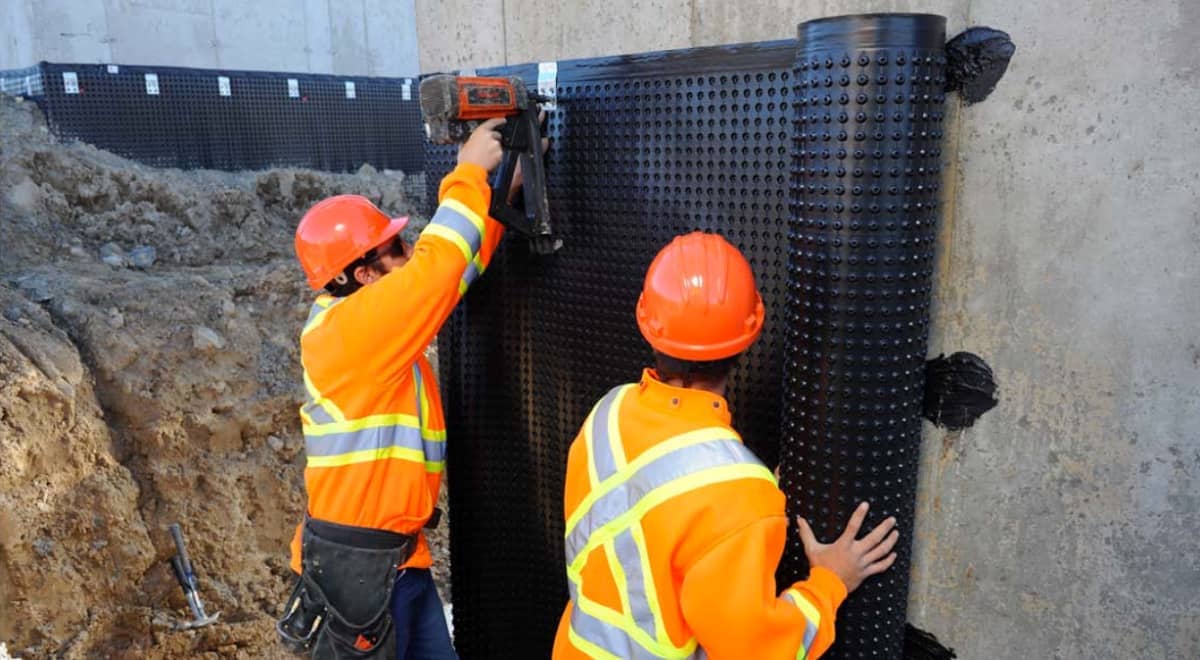
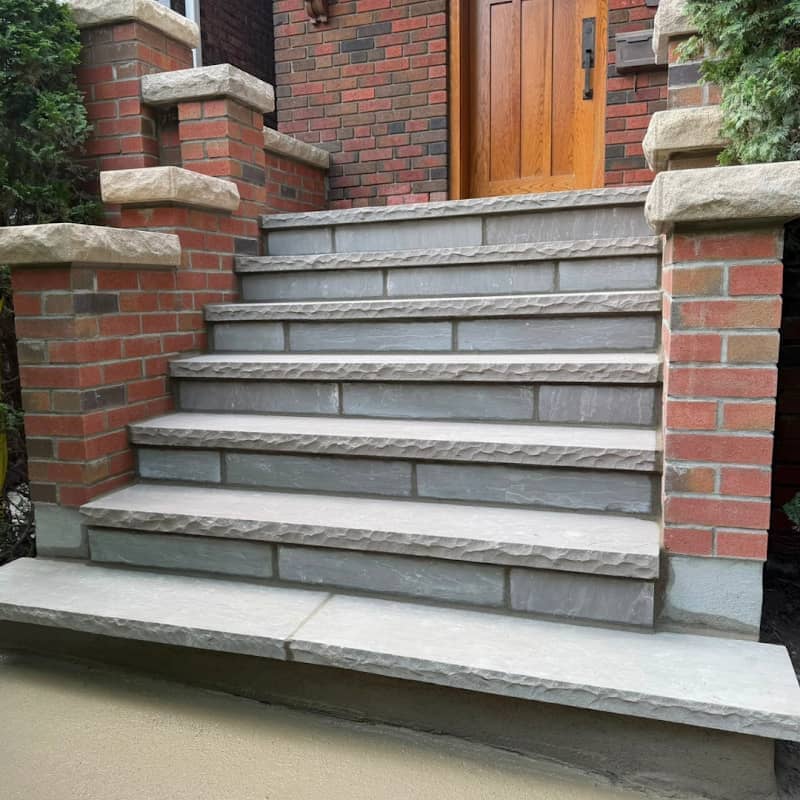
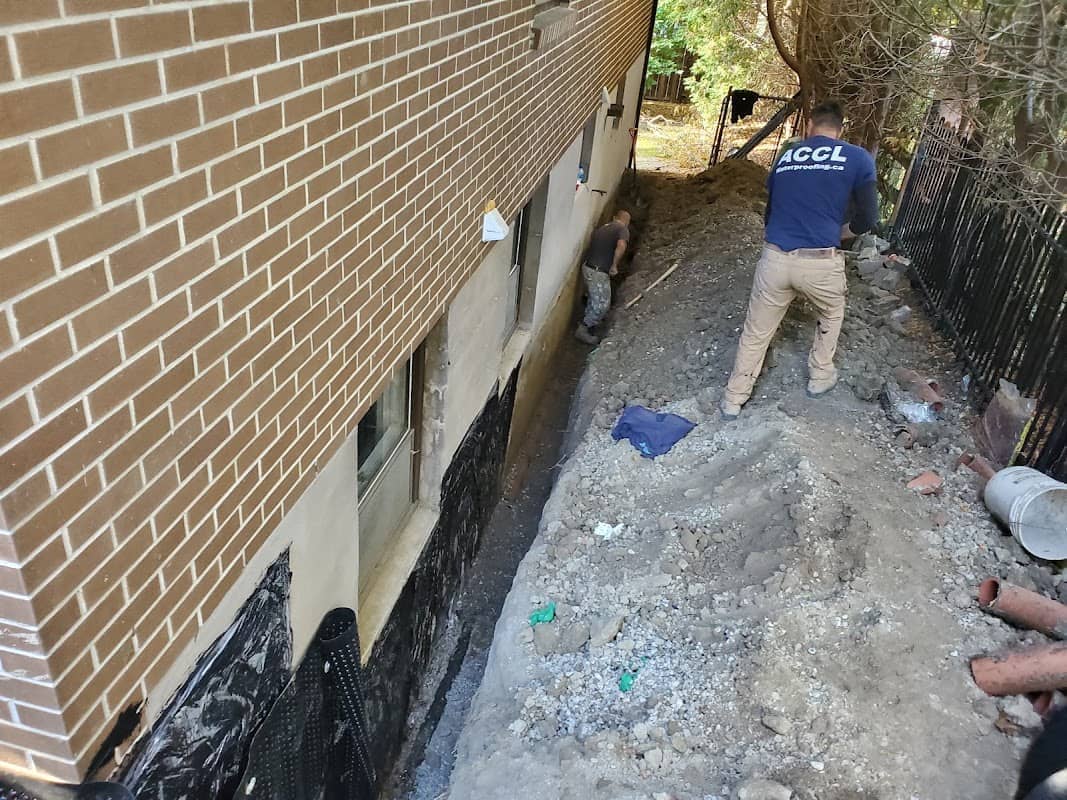
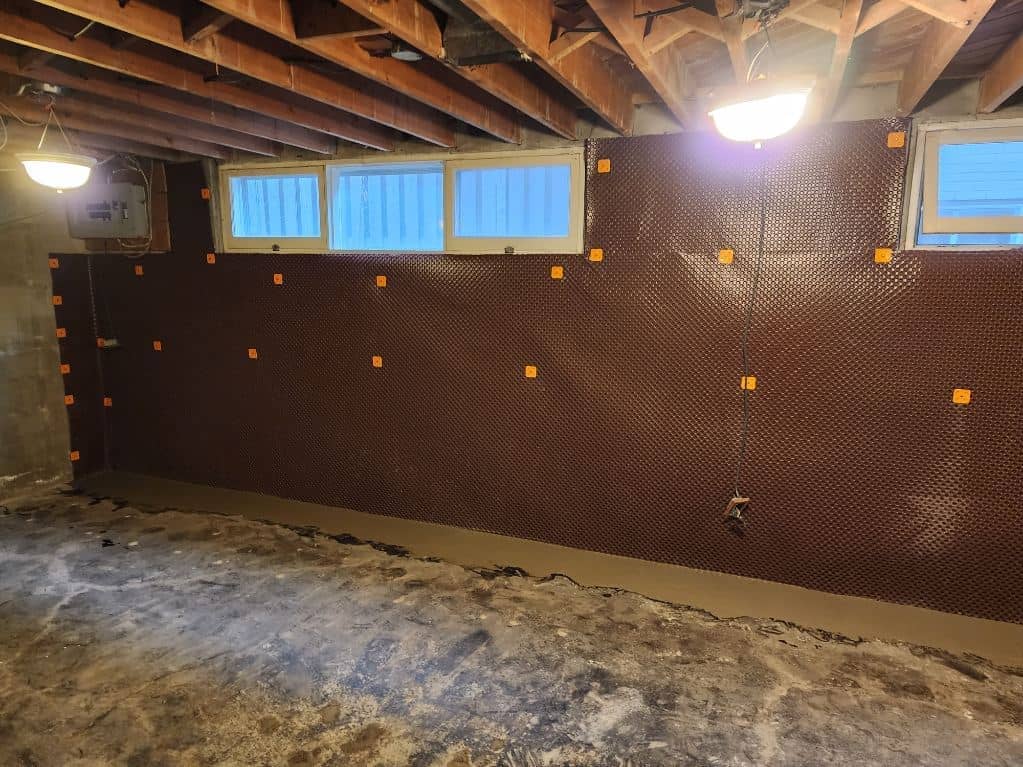
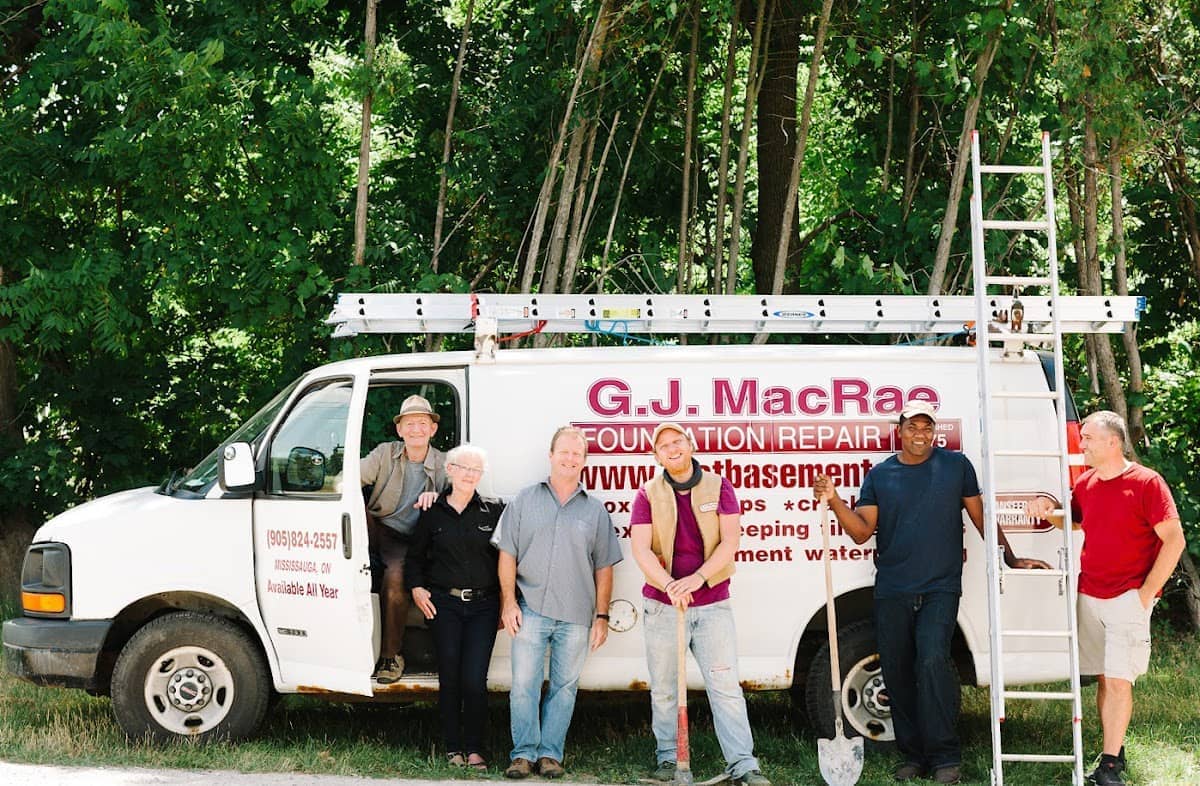
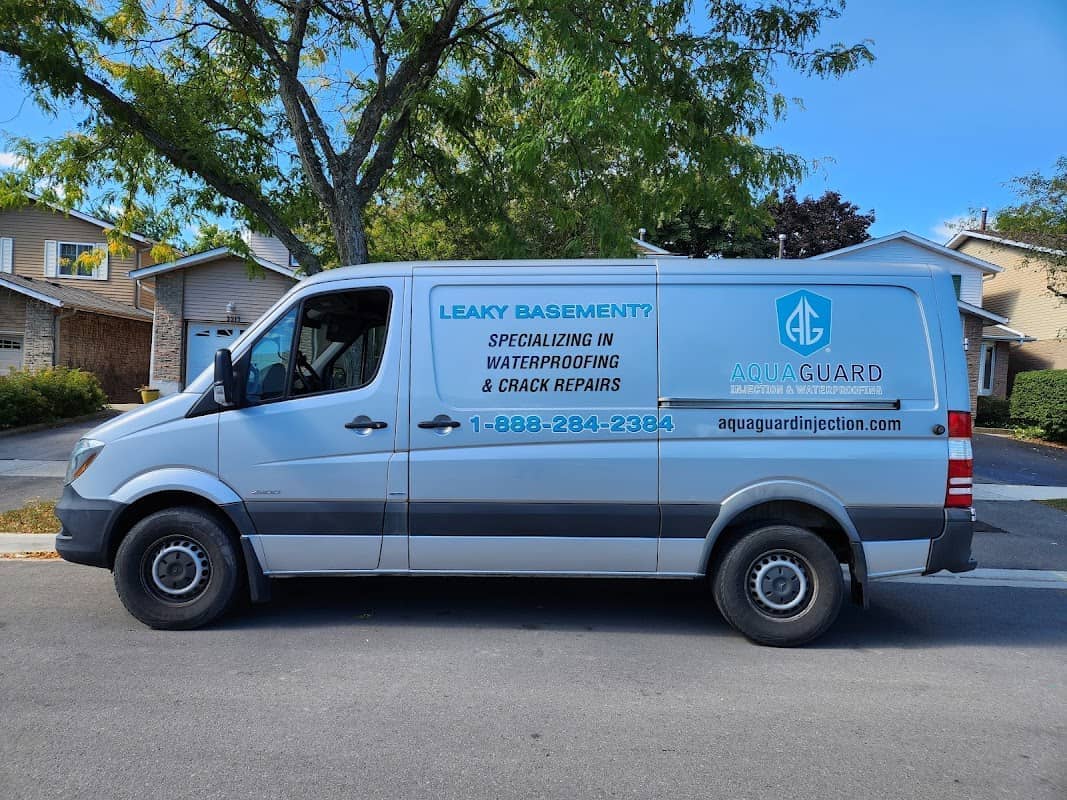
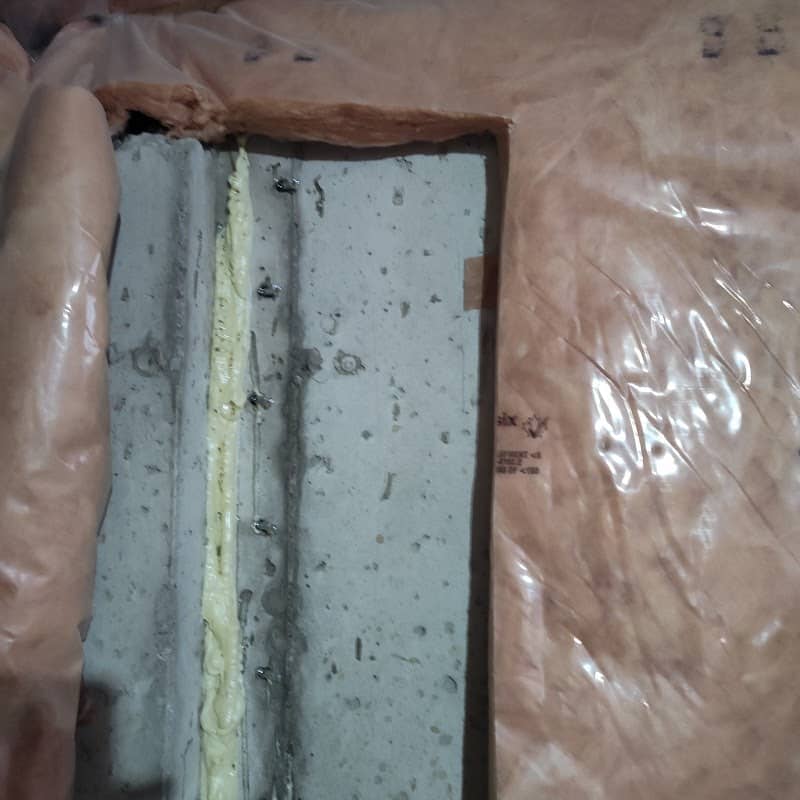
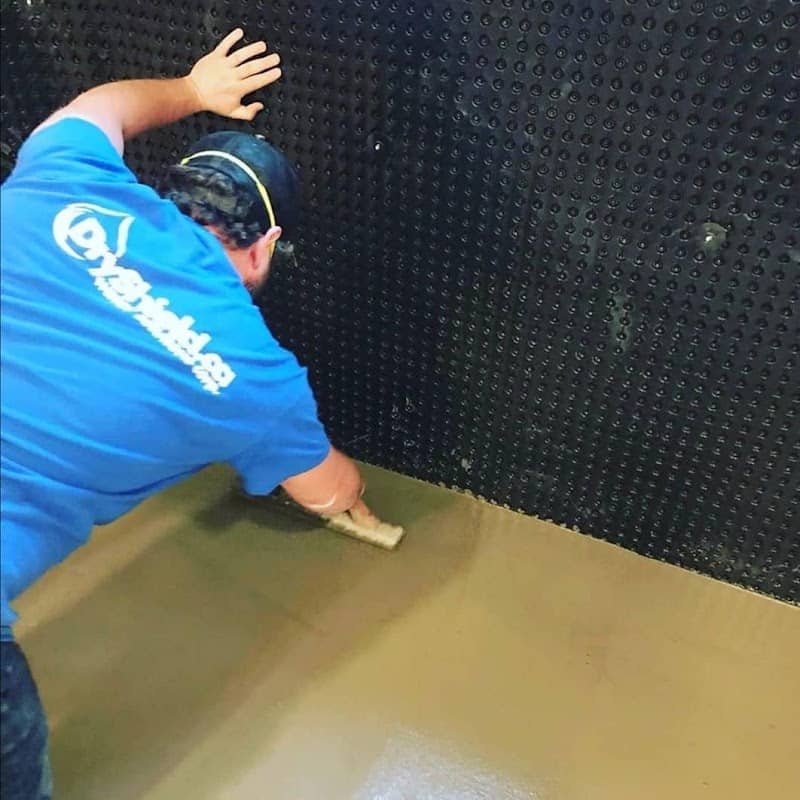
Every picture below was published by the company under it, on its own business listing, and WaterproofingIndex did not take any of them. Each of these companies describes below-grade water work on its own website, which is the same relevance check every profile on this site publishes. They are still not all the same kind of picture: some show a floor opened up mid-job, some show a truck or an office with the company's sign on it. None has been checked against a job in your area, and none is evidence of a price. They are here because a company that publishes its own excavation is showing you something a quote cannot.
Prices

Can I work out my own number?

The table above is the market. These calculators put your own basement into it, and they add the HST and any City of Toronto subsidy that applies.

Record

What do the terms on a below-grade quote mean?

These are the words that appear on a foundation repair quote without being explained. Each one changes what you are buying.

crack injection
Filling a foundation crack under pressure through ports drilled along it, with polyurethane where the aim is to stop a leak or epoxy where the aim is to bond the concrete back together.
parging
A thin cement coat applied to the exposed face of a foundation wall above grade. It is protective and cosmetic, not waterproofing, and it is priced by the square foot or by the side of the house.
underpinning
Deepening an existing foundation by excavating and pouring new footings in sequenced sections beneath the old ones. It is how a basement gains height without moving the house, and it is structural work that needs engineered drawings and a permit.
bench footing
The cheaper alternative to underpinning: the floor is lowered but a concrete bench is left running along the base of the existing wall so the footing is never undermined. It costs less and takes floor width instead.
backwater valve
A one-way valve fitted into the sanitary or storm lateral so that a surcharged city sewer cannot push sewage back up into the basement. It closes under reverse flow and opens again once the main clears.

Comparison

Which two options are you choosing between?

Most of the money on a foundation repair quote is decided before any number is written down, by which of two methods the company is proposing. These side by side pages are built from the same price rows as the table above.

Prices

Which cost guide should I read next?

Below-grade jobs overlap, and the wrong guide gives you the wrong budget. These three are the ones most often quoted alongside foundation repair.

Frequently asked questions

How much does it cost to fix a foundation crack in Toronto?

Most GTA contractors price interior crack injection at $750 to $1,500 per crack (DryShield), with polyurethane leak sealing at $750 to $1,000 and structural epoxy at $850 to $1,500 (Concrete Crack Repair Pros). Cheaper published ranges exist: Toronto Basement Underpinning lists $500 to $900 for polyurethane and $700 to $1,200 for epoxy. A full-service interior injection program on one accessible leaking seam runs $1,500 to $3,000 (Leaquida).

Why is exterior crack repair so much more expensive than interior injection?

Because it involves digging. DryShield prices external foundation crack repair with excavation and membrane at roughly $150 to $250+ per linear foot, totalling $5,000 to $20,000+ depending on depth and access, against $750 to $1,500 for the same crack injected from inside. Gamcon quotes $100 to $300 per linear foot for exterior repairs. Leaquida says excavation with membrane and new drainage typically starts around $15,000.

What does it cost to fix a bowing basement wall in the GTA?

Carbon fibre straps run $3,000 to $8,000 installed and steel wall anchors $5,000 to $12,000 (Toronto Basement Underpinning). Foundation Fix prices Southern Ontario straps at $2,000 to $5,000 per wall or $500 to $1,000 per strap. Straps stop further movement but do not straighten the wall; anchors can be tightened over time to recover some of the bow.

How much does parging cost in Toronto?

Alasya Construction publishes $6 to $12 per square foot for two-coat parging installed, and $3,500 to $7,000 for a full perimeter re-parging on a typical detached home. GTA Brickworks publishes a lower $3 to $8 per square foot and $900 to $3,500 for a standard detached foundation, rising to $2,000 to $4,500 where three or four sides are exposed. Spot repairs run $300 to $900 and one full side $800 to $2,000 (Alasya).

When does a foundation wall need rebuilding instead of repairing?

When it is too far gone for reinforcement. Toronto Basement Underpinning cites collapsed block, severely compromised poured concrete or significant bowing, and prices foundation wall replacement at $15,000 to $40,000 per wall. The work involves shoring the floor structure above, then demolishing and rebuilding the wall, which is why it costs several times what strapping the same wall would.

Do I need a structural engineer, and what does the report cost?

For anything beyond crack injection, yes. Toronto Basement Underpinning recommends it and prices a standard residential assessment at $500 to $1,000, or $1,000 to $1,500 for a complex one. Foundation Fix quotes $800 to $2,500 for an assessment and report. The report confirms the problem so you do not buy the wrong repair.

What does settlement damage cost to repair?

Localized footing repair, where settlement is confined to one section of footing, costs $8,000 to $25,000 (Toronto Basement Underpinning). Foundation Fix prices underpinning of a settled footing at $5,000 to $30,000 per footing and helical or push piers at $2,000 to $5,000 per pier. Whole-house underpinning is a separate job with its own pricing.

Is foundation repair covered by any Toronto rebate?

Not the repair itself. DryShield states foundation repair is generally not directly subsidized, but sump pumps and backwater valves installed alongside it may qualify for City of Toronto, Peel and Halton rebates. The City of Toronto Basement Flooding Protection Subsidy covers up to 80 per cent of the invoiced cost to a maximum of $1,600 per device for up to two eligible devices, plus up to 80 per cent to a maximum of $400 for certain other eligible items.

Is HST included in foundation repair quotes?

Usually not. DryShield states its published Ontario ranges exclude HST, and most GTA contractor price pages quote pre-tax. Add 13% on top of any figure you see, so a $1,500 crack injection is about $1,695 all in. Ask any contractor to confirm in writing whether their quote includes tax before you compare it against another.

Questions to ask your contractor

  • What is causing this, and what happens if it is left another year?
  • Is this a cosmetic repair or a structural one, and does an engineer sign the drawings?
  • Are you repairing, rebuilding a section, or bracing, and what rules out the other two? See what each approach costs
  • Who pulls the permit if this turns out to be structural work?
  • Which parts are your own crew, and which are subcontracted out?