Crawl space encapsulation vs a vapour barrier in Toronto: what is the difference?
Last updated: By Below-Grade Records Desk
Record
Why the two get mixed up
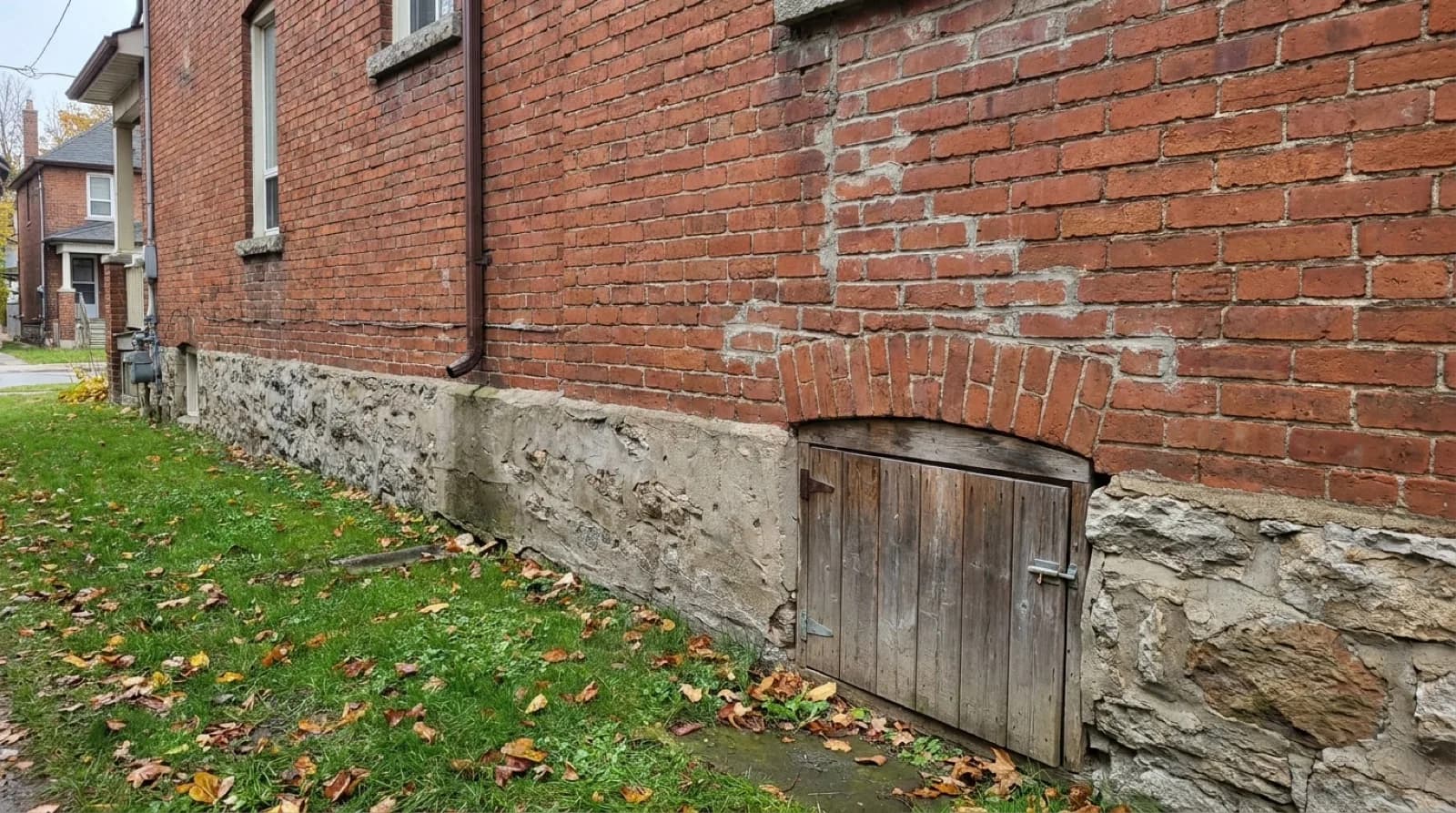
A crawl space is the short gap under a house where the floor sits on beams above bare soil or a thin slab, rather than over a full basement. Two fixes for a damp crawl space both start with plastic sheeting on the ground, which is why quotes for them are easy to confuse.
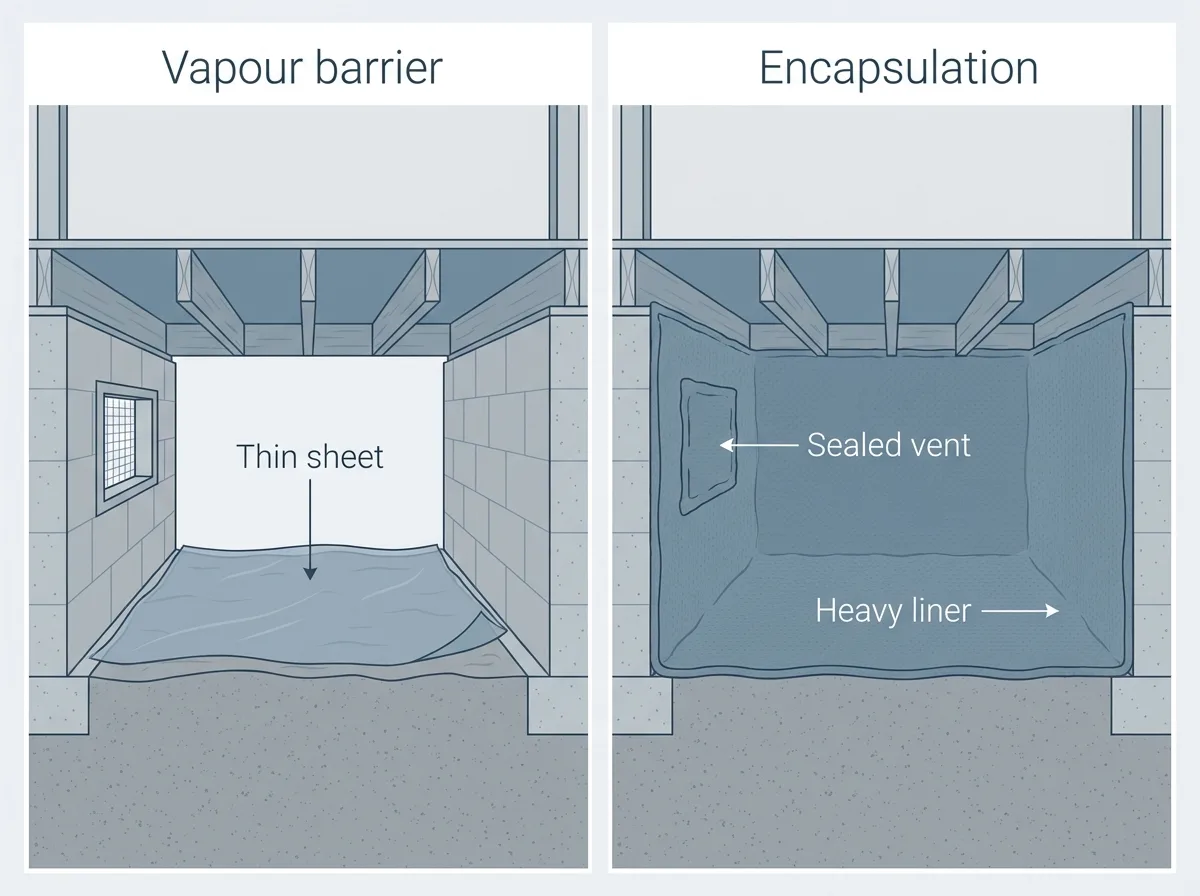
The first is a vapour barrier, which is a plastic sheet laid over the soil to slow the moisture that rises out of it. The second is encapsulation, which means sealing the whole space, floor, walls and vents, so it becomes part of the house instead of a damp cavity open to the ground and the outdoors. The sheet looks similar in both. The scope and the price do not.
Crawl spaces are not the usual setup in the city. DryShield, an Ontario waterproofing contractor, describes Toronto and the GTA in its regional price table as having "fewer crawl spaces" because the area is "basement-dominant". The index shows the same tilt: of its 384 company records, 225 are filed under basement waterproofing and 18 under crawl space work. Published crawl space prices are thin as a result, and this guide says where each one comes from.
Record
What is a plain vapour barrier?
DryShield's comparison guide defines a vapour barrier as a polyethylene sheet, usually 6 to 10 mil thick, laid across the crawl space floor. Mil is the unit the trade uses for plastic sheet thickness, and a higher number means a heavier sheet. The same guide calls it the minimum moisture control measure and says it is often what the original builder put down.
Its job is narrow. By the guide's account, the sheet slows moisture evaporating from exposed soil into the air above. It does not stop liquid water coming in, it rarely seals the foundation walls or the vents, and a thin sheet tears under foot traffic.
In the guide's words, a vapour barrier manages dampness from the ground and "is not a waterproofing system." The guide says a barrier alone is enough only if the crawl space "is completely dry, has no musty smell or mould, and has never had water intrusion." Any space that has had water in it falls outside that case.
That difference shapes the price. DryShield calls a vapour barrier inexpensive and fast to install. It describes encapsulation as a system with several parts. The next two sections set out those parts and what one contractor charges for them.
Record
What does full encapsulation add?
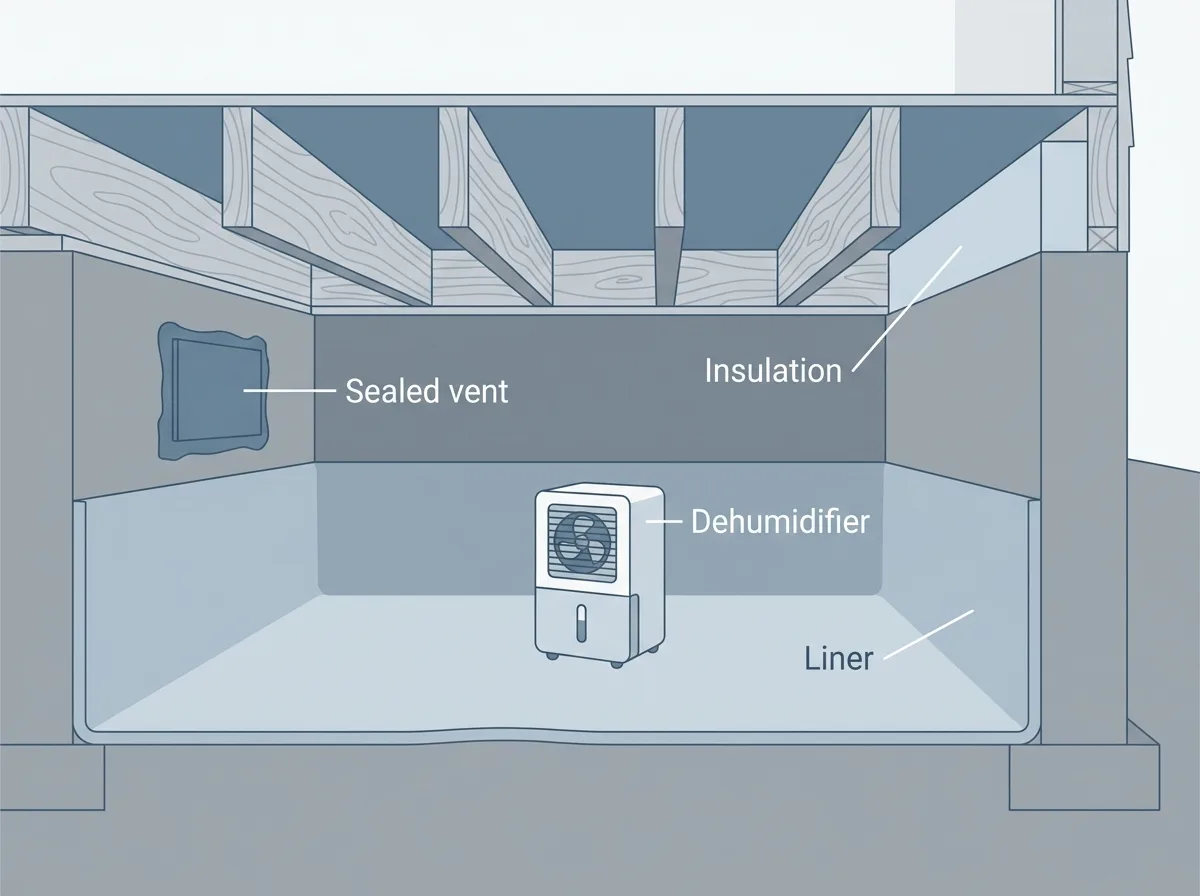
Encapsulation starts with a heavier sheet. DryShield's comparison guide puts the liner at a reinforced 12 to 20 mil, run across the floor and up the foundation walls, with the seams taped. The foundation vents are then sealed so humid outdoor air stops coming in.
The guide lists the rest of what it calls a full system. Insulation goes on the rim joists, the wooden band that sits on top of the foundation wall, and on the walls. A drainage path and a sump go in where water can get in. A dehumidifier, or a supply of conditioned air (heated or cooled air from the house system), holds humidity down once the space is closed up.
That last part matters for the quote. Sealing stops new moisture coming in, but by DryShield's account a dehumidifier or conditioned air is still what keeps the humidity down, so it treats humidity control as part of the system rather than an extra. A quote that seals the vents but leaves out any way to manage humidity is describing a different job from the one the guide calls full encapsulation.
Prices
What do the published prices show for each one?
This index holds crawl space prices from one Ontario contractor only, so every price below comes from DryShield's two pages. DryShield also has three records in this index, filed under basement waterproofing, foundation repair and crack injection; the index takes no money from it. The index has not checked these prices against any real invoice. DryShield's cost page gives its per square foot rate before HST, which is 13% in Ontario according to the Government of Ontario.
On its encapsulation cost page, DryShield lists a vapour barrier alone at about $1,200 to $4,000, which it describes as a floor sheet with a basic install and "not a full system". The same table puts basic encapsulation, meaning a reinforced liner, wall coverage and vent sealing, at about $4,000 to $8,000. A full system with insulation, drainage, a sump and a dehumidifier is listed at about $7,000 to $15,000 or more, with no ceiling given.
The same page gives a per square foot rate of about $7 to $10 for Ontario, and its regional table repeats that $7 to $10 range for Toronto and the GTA. It also lists closed-cell spray foam insulation (a dense foam sprayed onto the walls) on its own, with no moisture system, at about $1,500 to $4,500.
The two DryShield pages do not agree on the rate. The comparison guide gives about $7 to $15 per square foot for basic through full systems, and its table note calls these general market ranges drawn from North American pricing guides, which it does not name, and "not a DryShield quote". The cost page says its own table is based on Ontario market rates and DryShield pricing. Read the wider range as a market estimate and the narrower one as the range the contractor ties to its own pricing. The crawl space cost guide for Toronto holds the full table, and what a waterproofing quote should itemize covers how to read a line-by-line quote.
Prices
How does the size of the crawl space change the price?
DryShield's cost page says encapsulation is priced largely by floor area, because the liner, labour and materials all grow with the space. It publishes a size table that splits a basic liner-and-vents system from a full system with drainage, a sump pump and a dehumidifier.
For a 500 square foot crawl space, the table lists about $3,500 to $5,000 for a basic system and about $5,500 to $8,000 for a full one. At 1,000 square feet, the page puts a basic system at about $5,000 to $8,000 and a full system at about $8,000 to $12,000. At 2,000 square feet, it lists about $10,000 to $14,000 basic and about $16,000 to $20,000 or more for a full system.
The per square foot rate and the size table do not line up exactly, and the page does not say how one was built from the other. The page does name what moves a price within a band: how wet the space is, damaged framing that has to be repaired first, and low clearance or a tight hatch that slows the crew. None of those can be judged from a table, which is why these ranges are a planning guide and not a price for a given house. The page itself calls its ranges a planning estimate.
Record
When is sump pump installation in crawl space encapsulation needed?
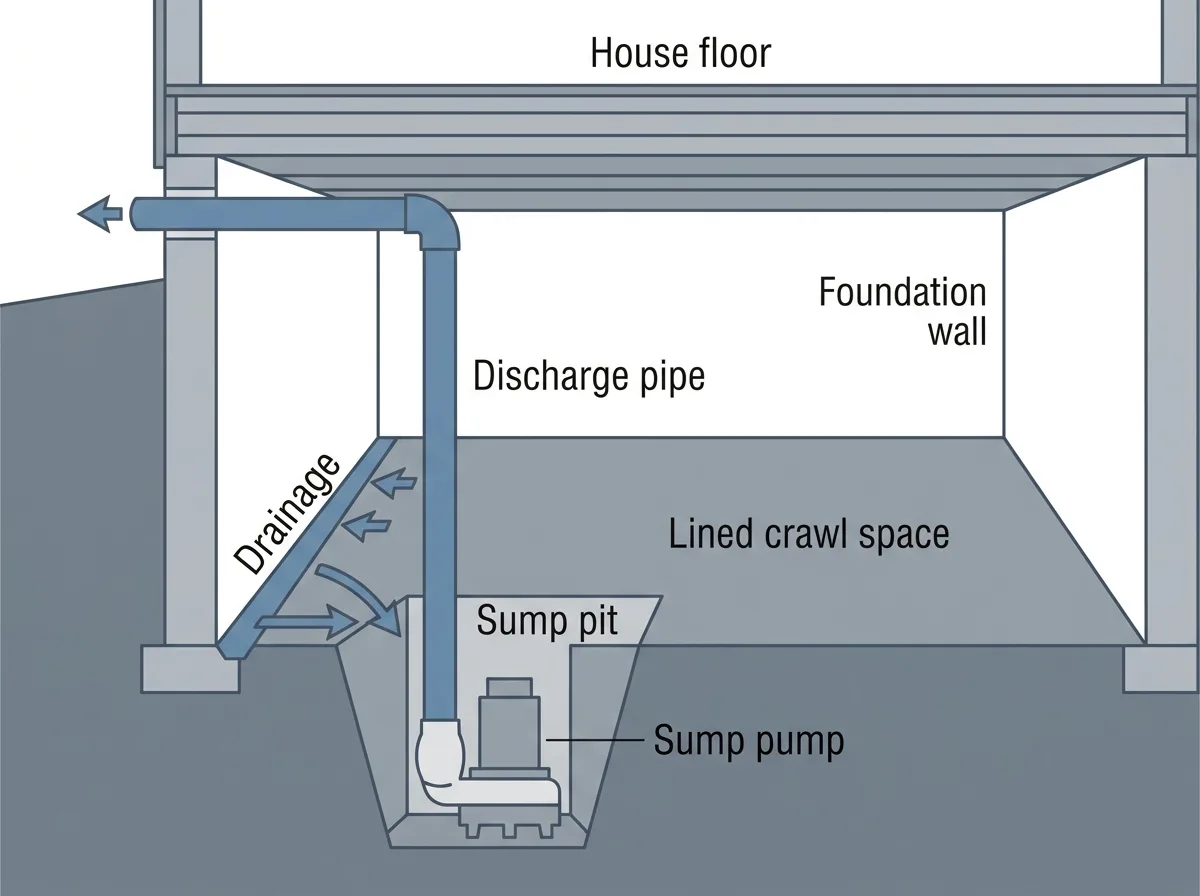
A sump is a pit that collects water, and a sump pump pushes that water out of the house. In a crawl space it pairs with a drainage path that leads water to the pit. DryShield's cost page lists drainage plus a sump pump at $1,000 to $3,000, and says it is "required where standing water or seepage is present." The page treats it as an add-on for a wet space, not a standard part of every job.
The same page lists a dehumidifier at $1,200 to $2,500 as a separate item in its table, while its FAQ says a crawl-space-rated unit "typically adds about $1,500 to $3,000" including installation. The page says add-ons like these are quoted separately on top of the base price, so two crawl spaces of the same size can come in far apart if one has water and the other does not.
This is also where a plain vapour barrier falls short. DryShield's comparison guide says encapsulation stops standing water only when it includes drainage and a sump, and that a barrier alone cannot control standing water or seepage. For what a pump costs on its own in Toronto, see the sump pump cost guide. For how pumps fail and what replacing one costs, see sump pump failure and replacement in Toronto.
Record
What this index holds on crawl space work
Of the 384 company records in this index, 18 are filed under crawl space waterproofing. All 18 list a website. Of those 18, 17 are also filed under basement waterproofing, 11 under sump pumps and backwater valves, and 5 under foundation repair. One record is filed under crawl space work alone, and its Google business label is insulation contractor rather than waterproofing service.
The 18 records are not 18 separate firms. When they are grouped by business name, 11 turn out to be branch listings that share one company name, and the 18 records cover 7 distinct business names in all. The index gives 14 of the 18 a neighbourhood or city area, spread over 12 different areas, and leaves 4 without one. Since nearly all of these companies also do basement work, the basement waterproofing directory is the wider list to search.
There are real gaps here. The index has never collected a quote for a crawl space, inspected one, or spoken to a homeowner about a finished job. Its only crawl space prices come from one contractor's published pages. It cannot say how many Toronto homes have crawl spaces, or which fix a given space needs. The trade-offs between inside and outside work on a full basement are covered in interior vs exterior basement waterproofing in Toronto.
WaterproofingIndex charges homeowners and contractors nothing, and no company pays for its place on a list. A request sent through the site's quote form reaches WaterproofingIndex by email, and the site's page for contractors says no enquiry has yet been passed to any company.
Frequently asked questions
Is a vapour barrier the same as crawl space encapsulation?
- No. DryShield's comparison guide describes a vapour barrier as a thin polyethylene sheet on the floor that slows moisture rising from the soil. Encapsulation uses a heavier reinforced liner on the floor and walls, seals the vents, and adds humidity control, with drainage and a sump where water can get in. The guide says a barrier alone does not stop liquid water.
How much does a crawl space vapour barrier cost in Ontario?
- DryShield's crawl space cost page lists a vapour barrier alone at about $1,200 to $4,000 before HST. The page describes this as a floor sheet with a basic install and says it is not a full system. This index has not collected any quotes of its own, so that range comes from one contractor's published page.
How much does it cost to encapsulate a 1,000 square foot crawl space?
- DryShield's cost page lists about $5,000 to $8,000 for a basic liner-and-vents system at 1,000 square feet, and about $8,000 to $12,000 for a full system with drainage, a sump pump and a dehumidifier. Prices are before HST, which the Government of Ontario puts at 13%. The page says moisture, damaged framing and tight access can move the final price.
Does a crawl space need a sump pump?
- Not always. DryShield's cost page lists drainage plus a sump pump at $1,000 to $3,000 and says it is required where standing water or seepage is present. A crawl space with no water coming in may not need one. Only someone who looks at the space can say which case applies, and this index has inspected no crawl spaces.
How many crawl space companies does this index list?
- Of the 384 company records in this index, 18 are filed under crawl space waterproofing. Of those 18, 17 are also filed under basement waterproofing. Grouped by business name, 11 of the 18 records are branches that share one company name, so the 18 records cover 7 distinct business names.
Method
Where the figures on this page came from
This index has never collected a quote. Every figure above is quoted from the source named beside it, or computed from this site’s own listing records.
- DryShield, Crawl Space Encapsulation Cost in Ontario (2026)
- DryShield lists a crawl space vapour barrier alone at about $1,200 to $4,000 before HST.
- DryShield, Crawl Space Encapsulation Cost in Ontario (2026)
- DryShield lists basic crawl space encapsulation at about $4,000 to $8,000 and a full system at about $7,000 to $15,000 or more, before HST.
- DryShield, Crawl Space Encapsulation Cost in Ontario (2026)
- DryShield gives about $7 to $10 per square foot for crawl space encapsulation in Ontario, and repeats that range for Toronto and the GTA in its regional table.
- DryShield, Crawl Space Encapsulation Cost in Ontario (2026)
- DryShield lists a 1,000 square foot crawl space at about $5,000 to $8,000 for a basic system and about $8,000 to $12,000 for a full system.
- DryShield, Crawl Space Encapsulation Cost in Ontario (2026)
- DryShield lists drainage plus a sump pump at $1,000 to $3,000 where standing water or seepage is present, and a dehumidifier at $1,200 to $2,500.
- DryShield, Crawl Space Encapsulation vs. Vapour Barrier
- DryShield's comparison guide describes a vapour barrier as a 6 to 10 mil sheet and an encapsulation liner as a reinforced 12 to 20 mil sheet.
- DryShield, Crawl Space Encapsulation vs. Vapour Barrier
- DryShield's comparison guide gives general market ranges of about $7 to $15 per square foot for crawl space encapsulation, before HST.
- Government of Ontario, Harmonized Sales Tax (HST)
- The Harmonized Sales Tax is 13% in Ontario.
Elsewhere